
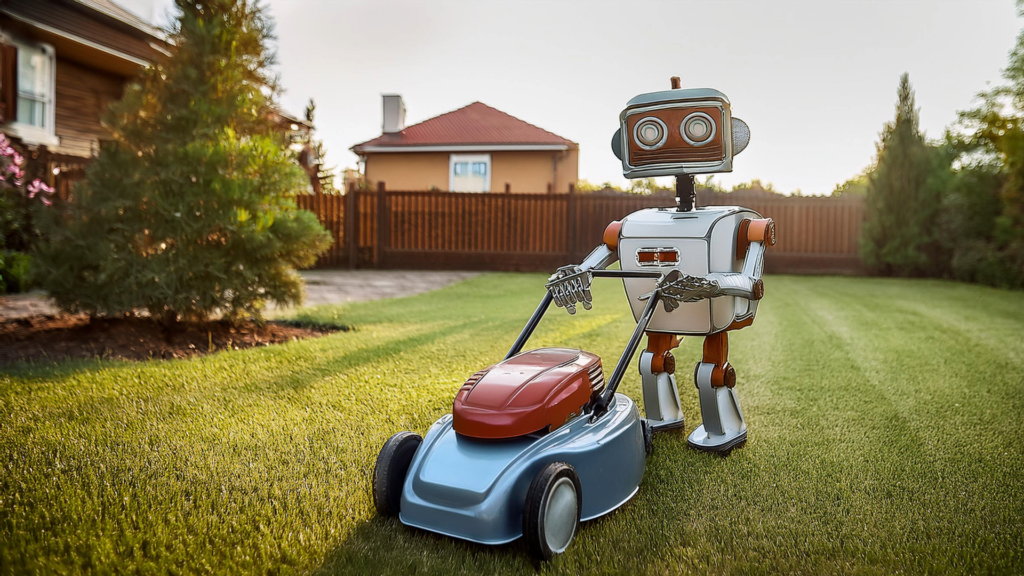
Back in the mid 20th century a robotic lawn mower probably seemed like a tin man from the Wizard of Oz pushing around a silver shining grass trimming device. However, today this kind of futuristic dream has been accomplished in a much different way. It winds up that today the now mainstream lawn mowing robots are just minimalistic discs. The machine is usually complete with its own stylized mini garage.
The concept of lawn mowing robots has actually been around for several decades, but their practical development and commercialization first began in earnest in the 1990s. The first commercially available lawn mowing robots are often credited to the Swedish company Husqvarna. They released their model, the Husqvarna Automower, in 1995. This early model laid the groundwork for the more advanced and widely used robotic lawn mowers available today.
The technology has been widely accessible for about a decade. In past few years lawn mowing robots have significantly evolved, with improvements in battery life, navigation systems, and automation, making robotic lawn mowers more efficient and accessible to homeowners.
Robotic lawn mowers are increasingly popular among homeowners seeking a convenient and efficient way to maintain their lawns. These autonomous machines promise to take the hassle out of lawn care by mowing your grass with minimal human intervention.
For those who are interested, what are the pros and cons of these sci-fi of yonder years, realized machines?
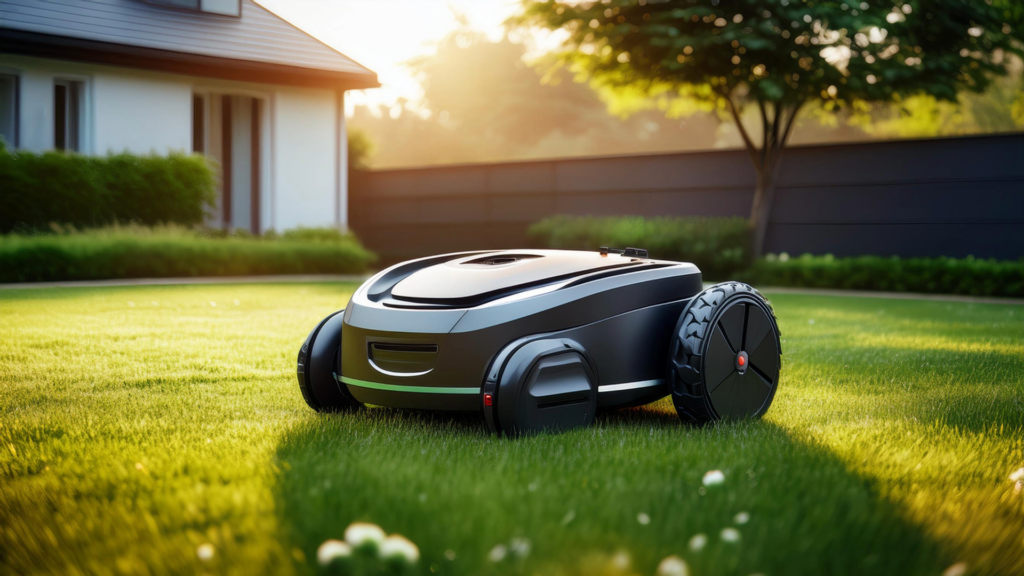
Pros of Robotic Lawn Mowers
Convenience:
Robotic lawn mowers operate autonomously, allowing you to reclaim the time you would have spent mowing. They can be programmed to mow at specific times, even when you’re not home.
Once set up, they require minimal supervision, freeing you up for other tasks or leisure activities.
Consistency:
These mowers can maintain a consistent grass length by mowing frequently, which promotes healthier grass and a good looking lawn. The fine clippings act as natural fertilizer, enriching the soil and reducing the need for additional fertilization.
Quiet:
Robotic lawn mowers operate quietly, allowing you to mow your lawn at any time without disturbing your neighbors or your own peace and quiet.
Enhanced Safety:
Equipped with sensors, robotic mowers can detect obstacles and avoid them, reducing the risk of accidents. They often have safety features that stop the blades immediately if the mower is lifted or tilted, preventing injuries.
Smart Technology Integration:
Many models can be controlled via smartphone apps, allowing you to monitor and manage your mower remotely. Advanced models offer features like GPS tracking, rain sensors, and customizable mowing patterns.
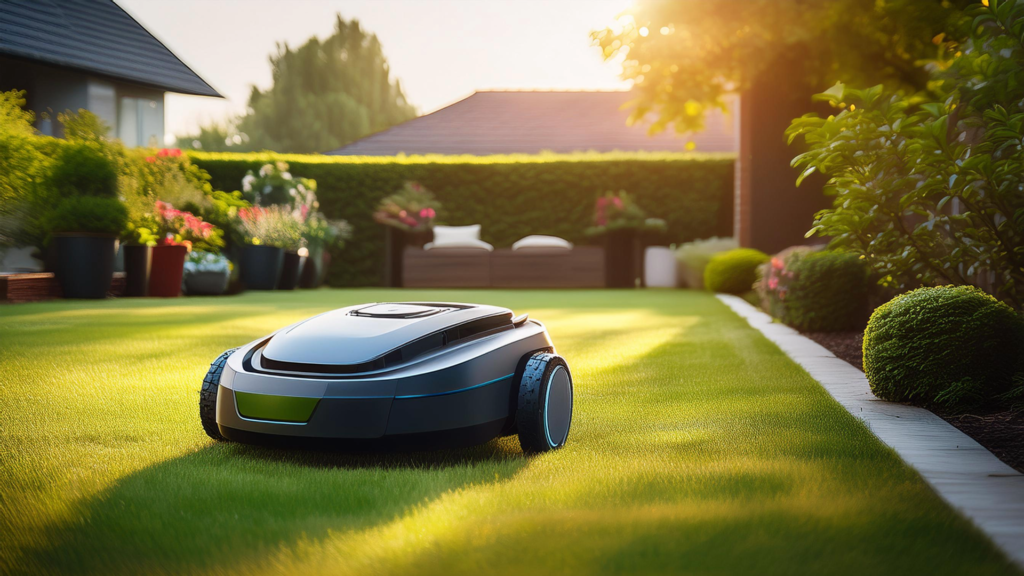
Cons of Robotic Lawn Mowers
Costs:
Robotic lawn mowers can be significantly more expensive than traditional mowers. The initial investment can be a barrier for many homeowners. High-end models with advanced features can be particularly costly.
Robotic lawn mowers will usually run you between $800 to $2,000. However, some with many features will cost around $3,500 or more on the high end.
While they require less hands-on mowing, robotic mowers still need regular maintenance, such as cleaning, blade replacement, and software updates.
Repairs can be costly and may require professional assistance, especially if parts need to be replaced.
Setup and Installation:
Proper setup can be time-consuming and may require some technical know-how, especially for models that need boundary wires to define the mowing area.
Incorrect setup can lead to inefficient mowing patterns and missed areas.
Limited to Certain Lawn Types:
Robotic mowers are best suited for relatively flat and obstacle-free lawns. Complex landscapes with steep slopes, dense trees, or numerous flower beds can pose challenges.
They may struggle with very tall grass or thick, overgrown lawns, requiring manual intervention to trim these areas first.
Battery Life:
The battery life of a robotic mower limits how long it can operate before needing a recharge. Larger lawns may require multiple charging cycles to complete.
Charging stations need to be strategically placed and easily accessible, which may not always be convenient.
Security Concerns:
Robotic mowers, especially high-end models, can be a target for theft due to their high value. Some models come with security features like PIN codes and GPS tracking, but these are not foolproof.
Robotic lawn mowers offer numerous benefits, including convenience, consistent lawn maintenance, and eco-friendly operation. However, they also come with drawbacks such as high initial costs, maintenance requirements, and limitations based on lawn complexity. When considering a robotic lawn mower, weigh these pros and cons against your specific needs, lawn characteristics, and budget. By doing so, you can determine whether this innovative lawn care solution is the right fit for your home and lifestyle.