
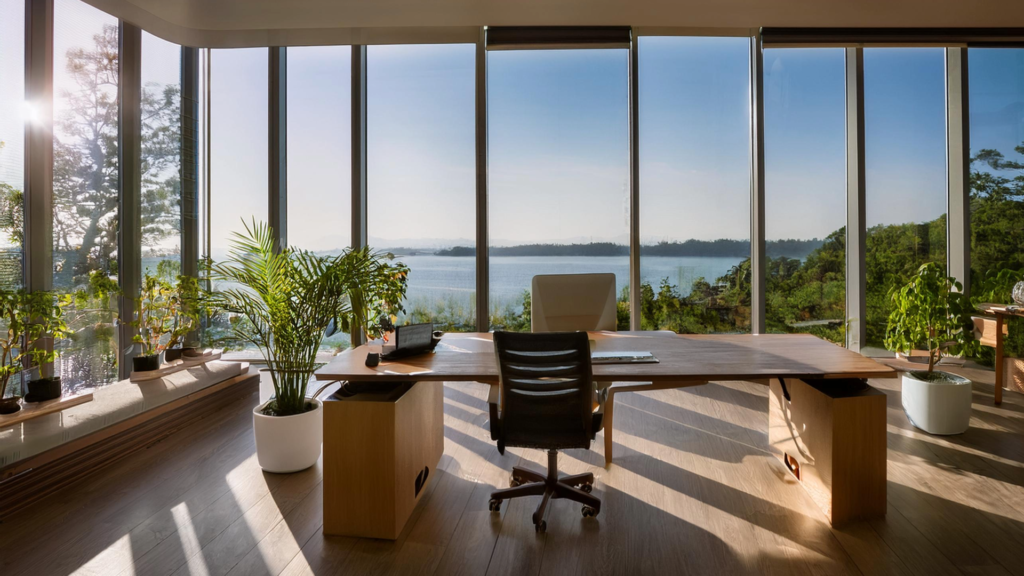
A zen workspace promotes tranquility and focus by incorporating minimalistic design, natural elements, and calming colors. It minimizes clutter, features ergonomic furniture, and uses soft lighting to create a serene environment. This setup enhances productivity and mental well-being, fostering a balanced and stress-free work set up.
The Backstory
Zen interior design, rooted in Zen Buddhism, emerged in Japan during the 13th century. It reflects Zen principles of simplicity and tranquility, influencing traditional Japanese aesthetics with clean lines, minimalism, and natural materials.
Over time, Zen design spread globally, promoting serene, uncluttered spaces that foster mindfulness and inner peace.

Zen interior design gained massive popularity in America during the 1970s and 1980s, influenced by the broader interest in Eastern philosophies and mindfulness. As Americans became more interested in simplifying their lifestyles and creating tranquil spaces, Zen-inspired design principles began to permeate mainstream interior aesthetics.
Zen interior design emphasizes simplicity, minimalism, and natural elements to create a tranquil and balanced space. It focuses on clean lines, neutral colors, and uncluttered environments to foster mindfulness and inner peace. Incorporating natural light, materials, and subtle textures enhances harmony and promotes a serene, calming atmosphere. A Zen workspace naturally flows with the needs of office and home office environments.
How do Zen Principles work in an Office Space?
While we are far from zen masters here at Realmiti, we enjoy the concepts of zen and why it is such a successful design regimen (especially for an office!). Creating a Zen-inspired office space can transform your work environment into a sanctuary of calm and focus. By incorporating Zen principles, you can foster a setting that enhances productivity, reduces stress, and promotes overall well-being. Here’s a comprehensive guide on how to implement Zen principles in your office space.
Understanding Zen Principles
Zen is a school of Mahayana Buddhism that emphasizes meditation, simplicity, and mindfulness. Its principles focus on creating balance and harmony, both internally and externally. Applying these principles to your office space involves creating a serene, uncluttered environment that supports mental clarity and tranquility.
1. Minimalism
Minimalism is central to Zen. The goal is to keep only what is necessary and remove excess. Start by decluttering your office. Evaluate every item on your desk, in your drawers, and on your shelves. Keep only those items that are essential or bring you joy. Use storage solutions that are functional and unobtrusive, such as sleek drawer organizers or wall-mounted shelves. Minimalism is a natural feature in a zen workspace.
Clear out old paperwork and files.
Remove non-essential decorative items.
Organize cables and office supplies in simple, elegant containers.
2. Natural Light and Airflow
Zen spaces often emphasize the importance of natural elements. Maximize the amount of natural light in your office by positioning your desk near a window. If natural light is limited, use soft, warm artificial lighting that mimics daylight. Ensure proper airflow by keeping windows open when possible and using air purifiers to maintain clean, fresh air.
Position your desk to take advantage of natural light.
Use light-filtering curtains or blinds to control light levels.
Consider adding indoor plants to improve air quality and add a touch of nature.
3. Pieces of Nature
Bringing parts of the natural world into your office can enhance the Zen atmosphere. Plants, stones, and water features can create a calming environment. Choose low-maintenance plants like succulents or bamboo, which are easy to care for and add greenery without overwhelming the space. You can also opt for sourcing a bonsai tree locally and a learn about the bonsai community.
Place a small potted plant or bonsai on your desk.
Use natural materials like wood or stone for desk accessories.
Consider a small, soothing water fountain for a touch of tranquility.

4. Harmonious Color Palette
Color plays a significant role in creating a Zen workspace environment. Opt for soft, neutral colors such as whites, grays, and beige, which can help promote a sense of calm and balance. These colors also make the space feel more open and less cluttered.
Paint walls in neutral tones or use light-colored wallpaper.
Choose office furniture and accessories in muted colors.
Avoid overly bright or harsh colors that can be distracting.
5. Simple, Functional Furniture
Zen workspace design values simplicity and functionality. Select furniture that is not only aesthetically pleasing but also practical and comfortable. Choose desks and chairs with clean lines and minimal ornamentation. Ensure that your workspace is ergonomic to support good posture and reduce physical stress.
Invest in a desk and chair that promote good ergonomics.
Keep furniture to a minimum, focusing on what is essential.
Opt for pieces with a simple design and natural materials.
6. Mindful Organization
Organizing your office mindfully involves arranging your space in a way that supports ease and flow. Use clear containers and labels to keep items organized and easily accessible. Arrange your workspace so that everything you need is within reach, minimizing unnecessary movement and distraction.
Use drawer organizers and desktop trays to keep items sorted.
Label storage containers to make finding things easier.
Arrange your desk items in a way that promotes efficiency and reduces clutter.
7. Create a Dedicated Meditation Space
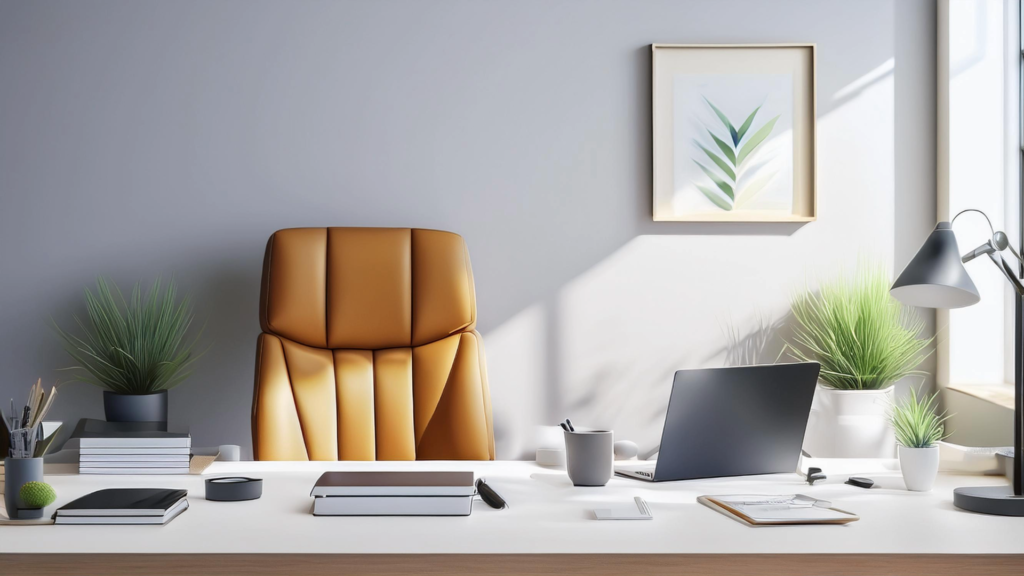
Having a dedicated area for meditation or mindfulness practice can enhance the Zen atmosphere of your office. Even a small corner with a comfortable cushion or chair can serve as a space for brief meditation sessions or deep breathing exercises. This space should be free from distractions and designed to promote relaxation. If your workspace does not allow this you can create it at your desk.
Find a small area where you can use a comfortable seat or cushion.
Add calming elements to the area like photos or inspirational quotes.
Use this space regularly for short breaks to practice mindfulness.
8. A Clean and Tidy Space
Regular cleaning is essential to maintaining a Zen office environment. A clean space helps reduce stress and keeps the mind focused. Develop a routine for tidying up at the end of each day, and address clutter as soon as it arises.
Establish a daily cleaning routine to keep your office organized.
Clear your desk and other surfaces at the end of each workday.
Address any mess or disorganization immediately to prevent buildup.
9. Calming Sounds
Sound can influence your work environment significantly. Incorporate calming sounds into your office to promote a peaceful atmosphere. Consider using a sound machine or app (perhaps with headphones if necessary) that plays gentle nature sounds, like flowing water or birdsong, to create a relaxing background in a zen workspace.
Use a white noise machine or calming sound app during work hours.
Choose sounds that are soothing and non-distracting.
Adjust the volume to a level that enhances focus without being intrusive.
10. Mindfulness and Presence
Zen is deeply rooted in mindfulness and presence. Incorporate practices that help you stay focused and present in your work. This can include setting aside time for brief mindfulness exercises, such as deep breathing or body scans, to center yourself throughout the day.
Set aside a few minutes each day for mindfulness practice.
Use techniques like deep breathing or progressive muscle relaxation.
Incorporate mindful breaks into your work schedule to maintain focus and reduce stress.

Implementing Zen principles in your office space can lead to a more harmonious and productive environment. By embracing minimalism, prioritizing natural elements, and creating a calm, organized space, you can create a zen workspace that enhances focus, reduces stress, and supports overall well-being.
Remember, the goal is to create an environment that reflects balance and tranquility, allowing you to work with clarity and ease.
We hope these steps can help you transform your office into a Zen-inspired haven that supports both your professional and personal growth.
zen workspace.